JPR Stitch: The Persistence of the Thread
Sewing is usually associated with joining, repairing, or constructing a surface. In the hands of JPR Stitch, however, machine embroidery becomes a process of artistic exploration. The needle and thread trace paths, accumulate colour, build forms, and leave the mark of a repeated gesture upon the fabric. Over the course of five years, this practice has shaped its own visual language, the evolution of which is captured in a catalogue that explores both the works and the reflections accompanying their creation.
Behind JPR Stitch is the British artist Dr Jack Roberts, born in 1989 in Newcastle-under-Lyme and based in Shropshire. His academic background includes a PhD in Philosophy from Manchester Metropolitan University, an MA in Arts and Museum Management from the University of Salford, and studies in Contemporary Art Practice at Staffordshire University. Before dedicating himself to his own artistic production, he spent approximately fifteen years working as an art dealer, consultant, and lecturer. This experience provided him with an extensive knowledge of the sector, although, as he acknowledges in the interview included in the book, for a long time he had not given himself permission to create a body of work that truly represented him.
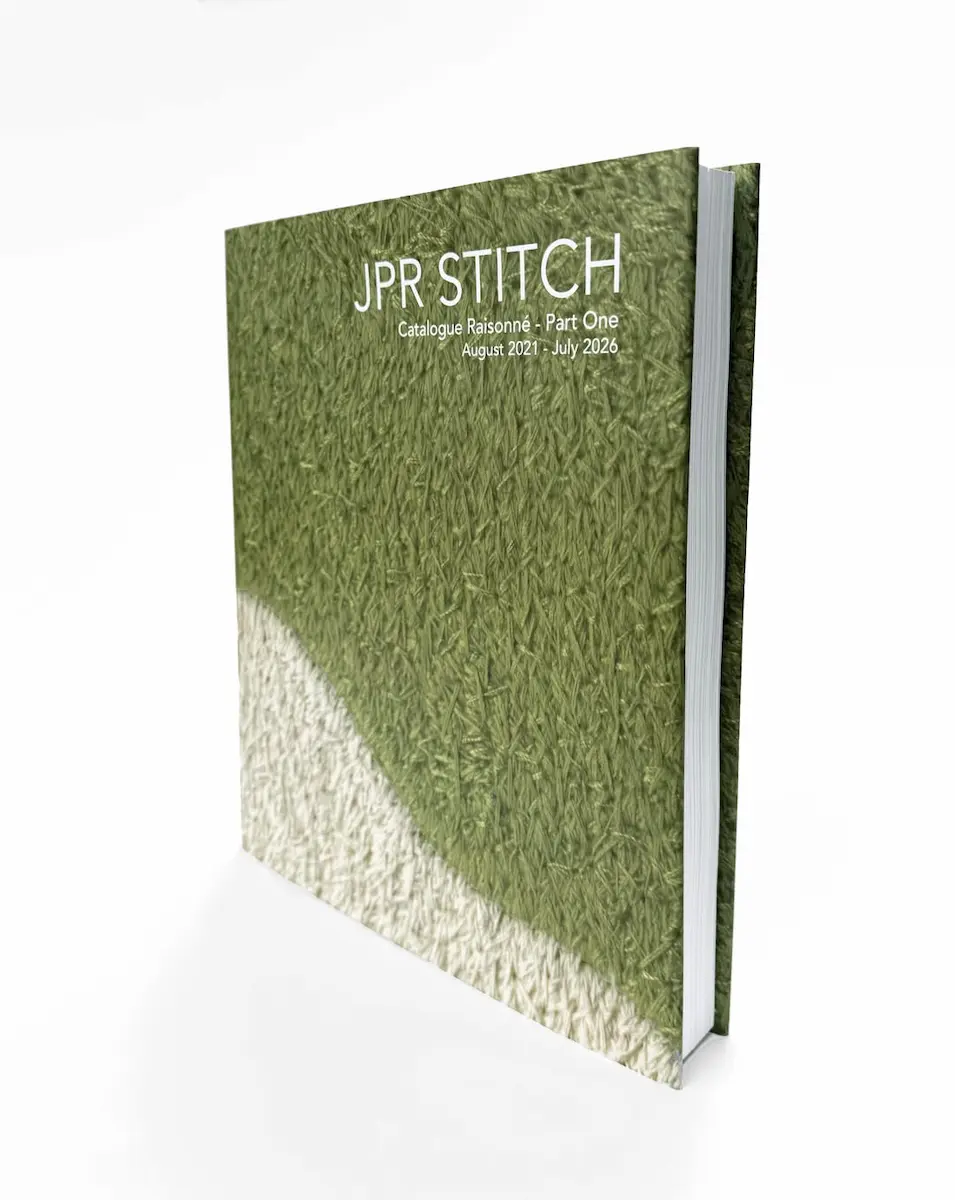
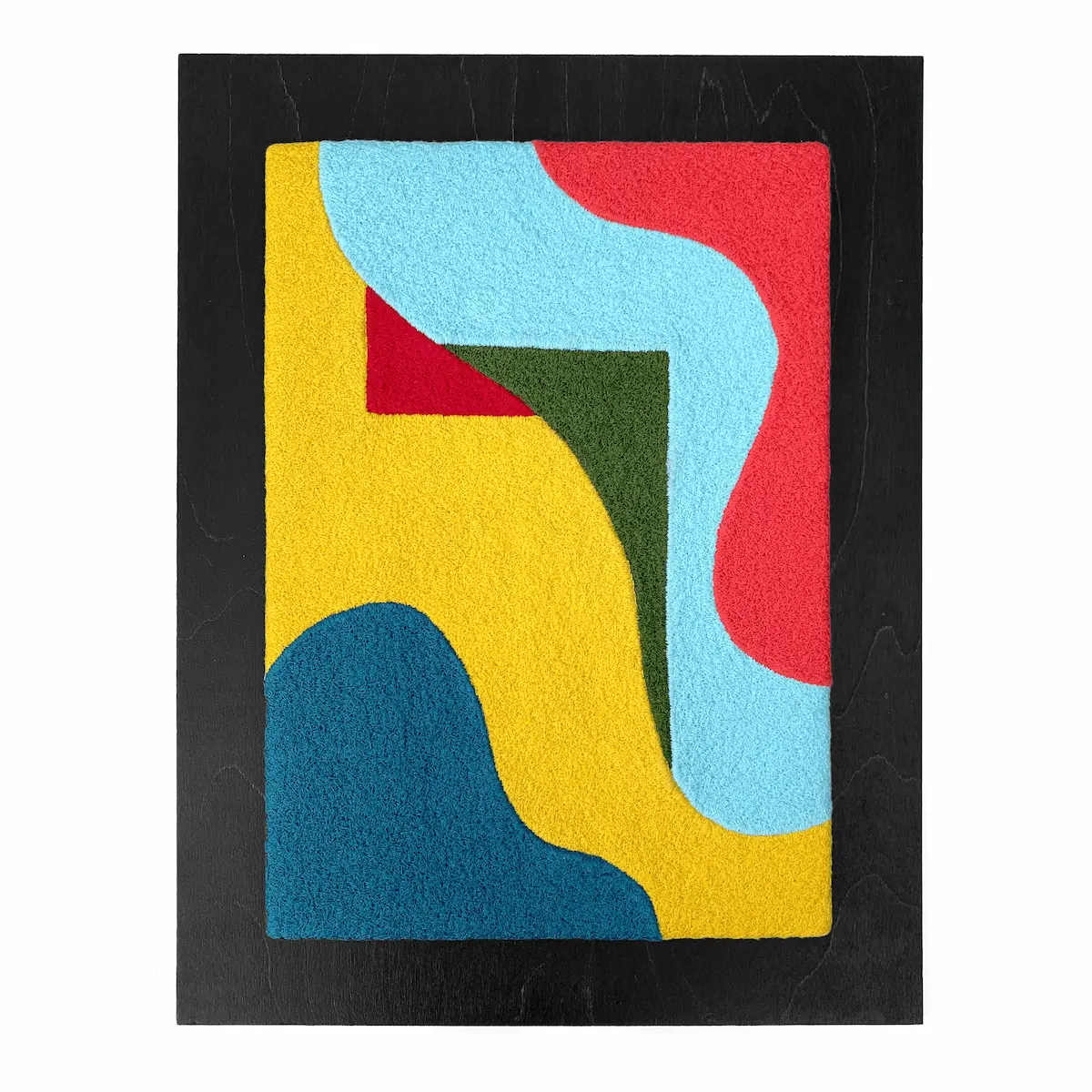
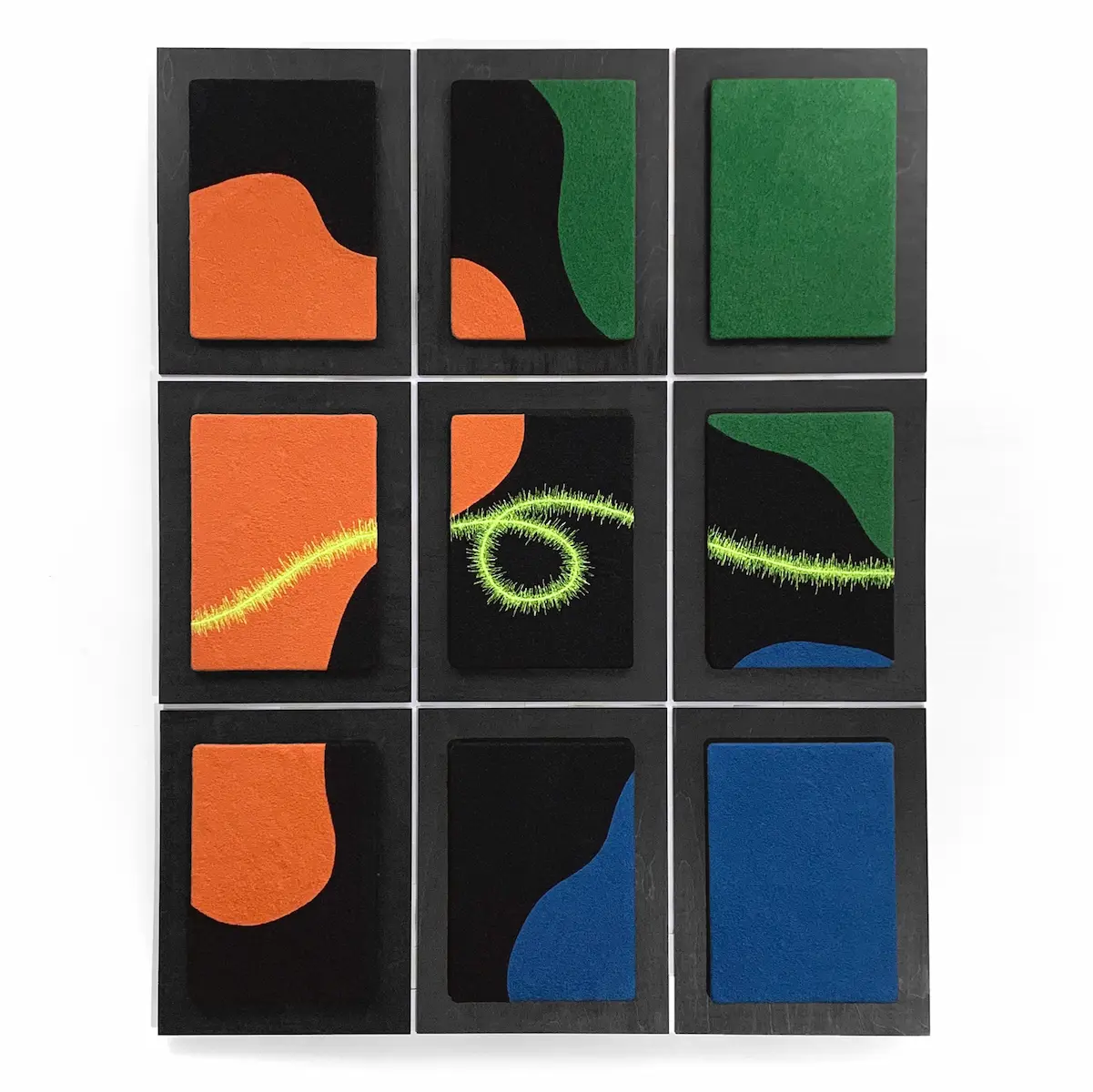
The catalogue JPR Stitch. Catalogue raisonné – Part One. August 2021 – July 2026 brings together five years of artistic research through works, reflections, drawings, editions, and records of various experiences with machine embroidery. Embroidery revives a practice from his childhood, transforming it into a medium for abstract expression. Roberts does not necessarily start from a prior design: he selects a thread colour and allows the movement of the machine and his intuitive decisions to guide the process. Forms emerge during execution, modifying themselves and finding their own rhythm. The line may become agitated or fluid; the colour, abundant or restrained. The result is not a fully planned composition, but rather a succession of decisions made whilst working.
This method of making establishes a distinct relationship between gesture and emotion. Roberts acknowledges that the lines, colours, and density of each piece can be linked to his frame of mind. However, he does not intend to impose an autobiographical reading on the works. Indeed, he notes that some pieces he perceives as unsettling or melancholic have been received by other viewers as images full of energy or serenity. This distance between the artist’s experience and the audience’s perception is significant: once finished, the work ceases to belong exclusively to the emotion that originated it and acquires its own presence.

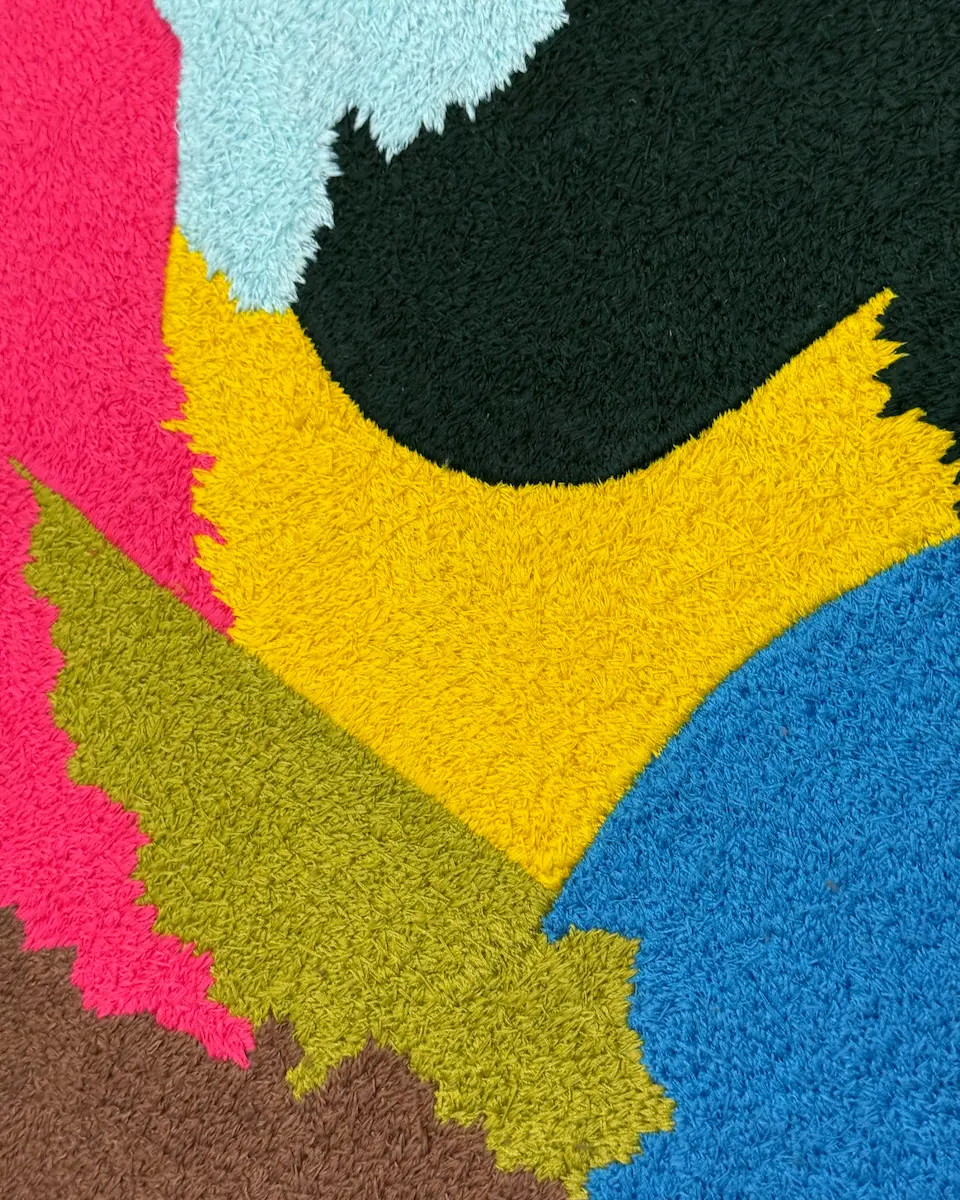
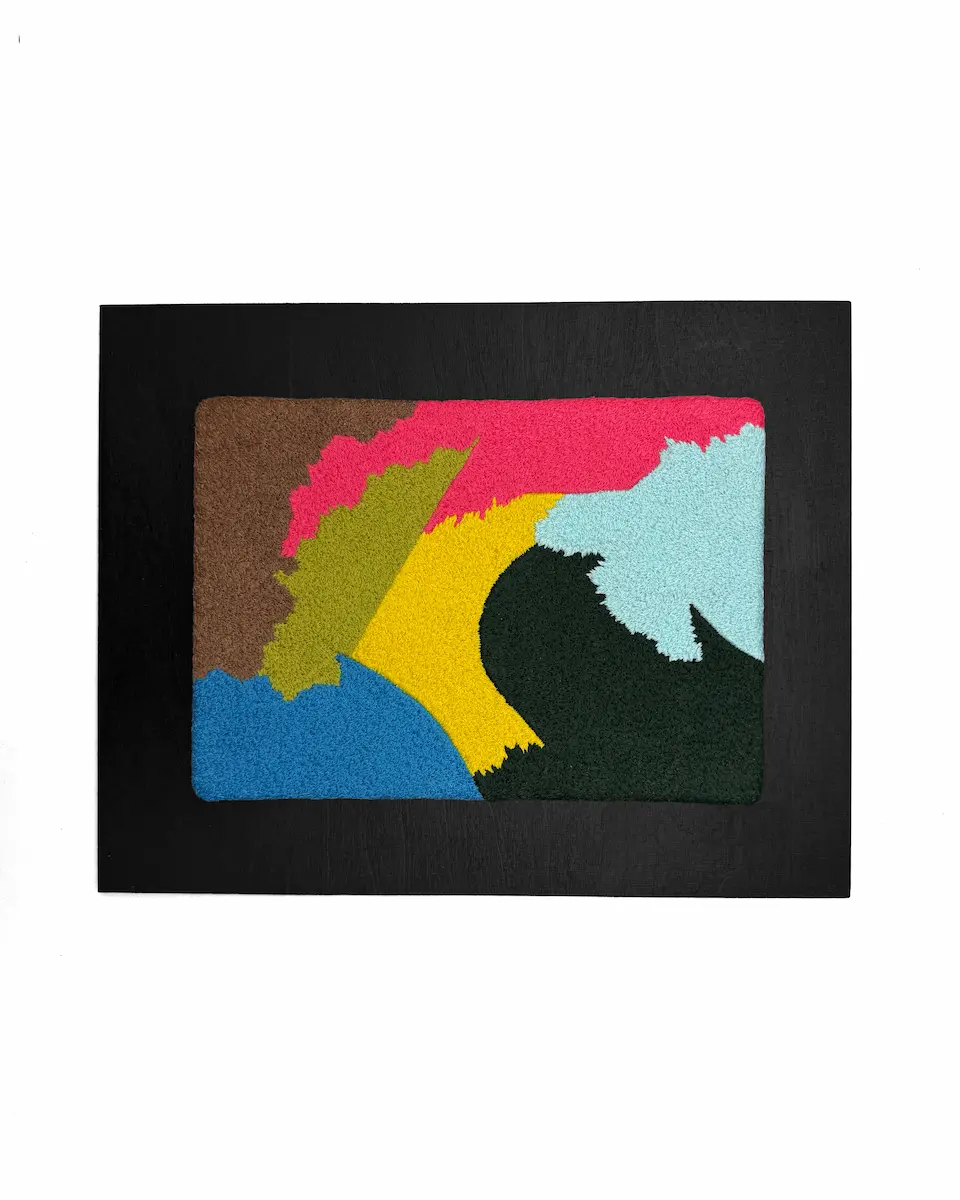

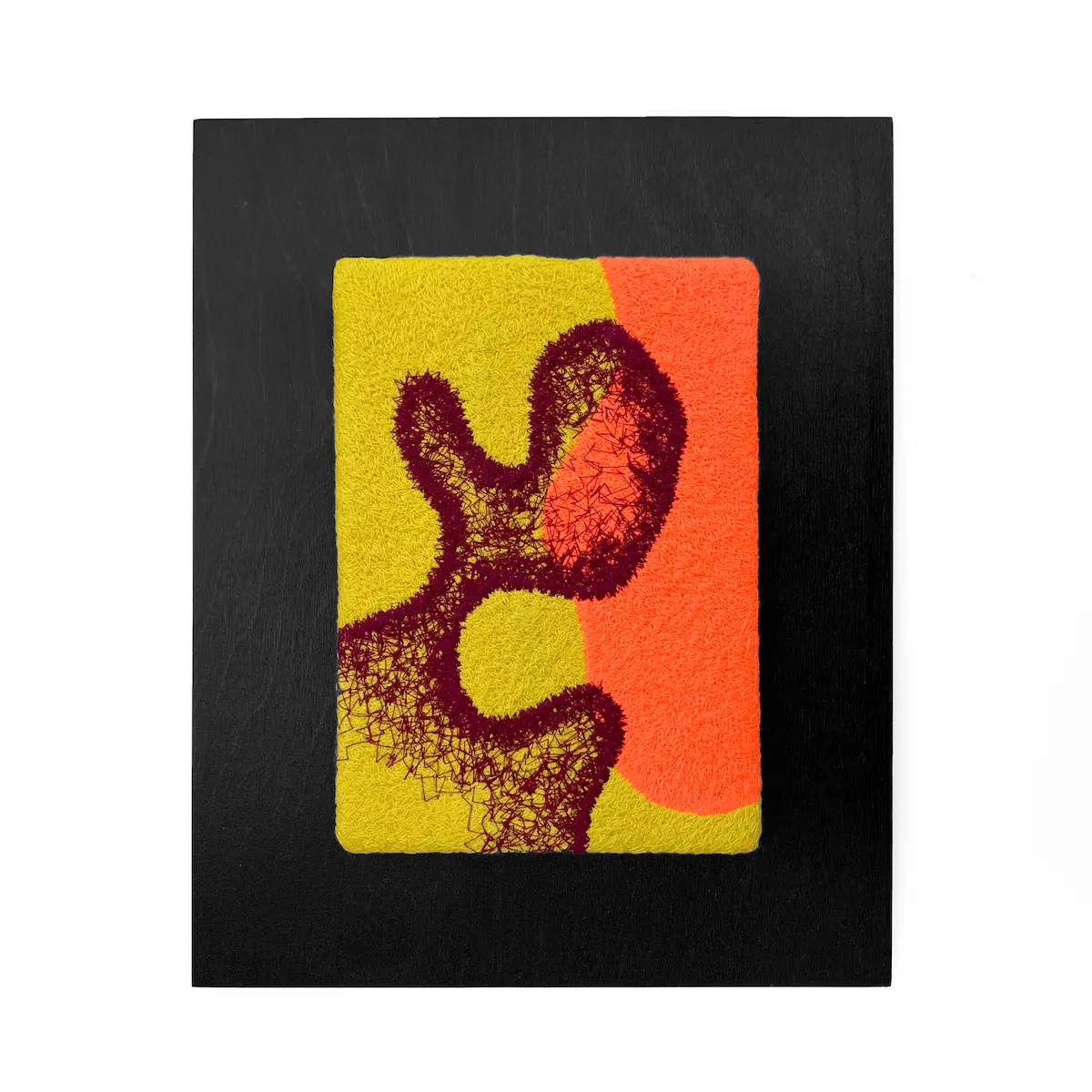


Daily practice occupies a central place in this process. Since the summer of 2021, Roberts has incorporated machine embroidery into his routine, even when he only has a few minutes to spare. Repetition does not function solely as a discipline of production; it is also a form of concentration and contemplation. The sound and vibration of the machine contribute to this state of mindfulness, in which thoughts quieten and the work gains continuity. Creation thus appears linked to a search for balance, though not necessarily to stillness or the absence of conflict.
In the works compiled in the catalogue, a progressive broadening of his formal resources is noticeable. The earliest pieces explore the possibilities of the textile surface through accumulations of thread, chromatic contrasts, sinuous lines, and geometric structures. Over time, the compositions diversify their forms and relationships: more defined fields of colour appear, alongside drawings of greater complexity and different ways of organising repetition. This is not a linear evolution or the replacement of one language by another, but an expansion of possibilities within a practice that retains the thread as its guiding element.
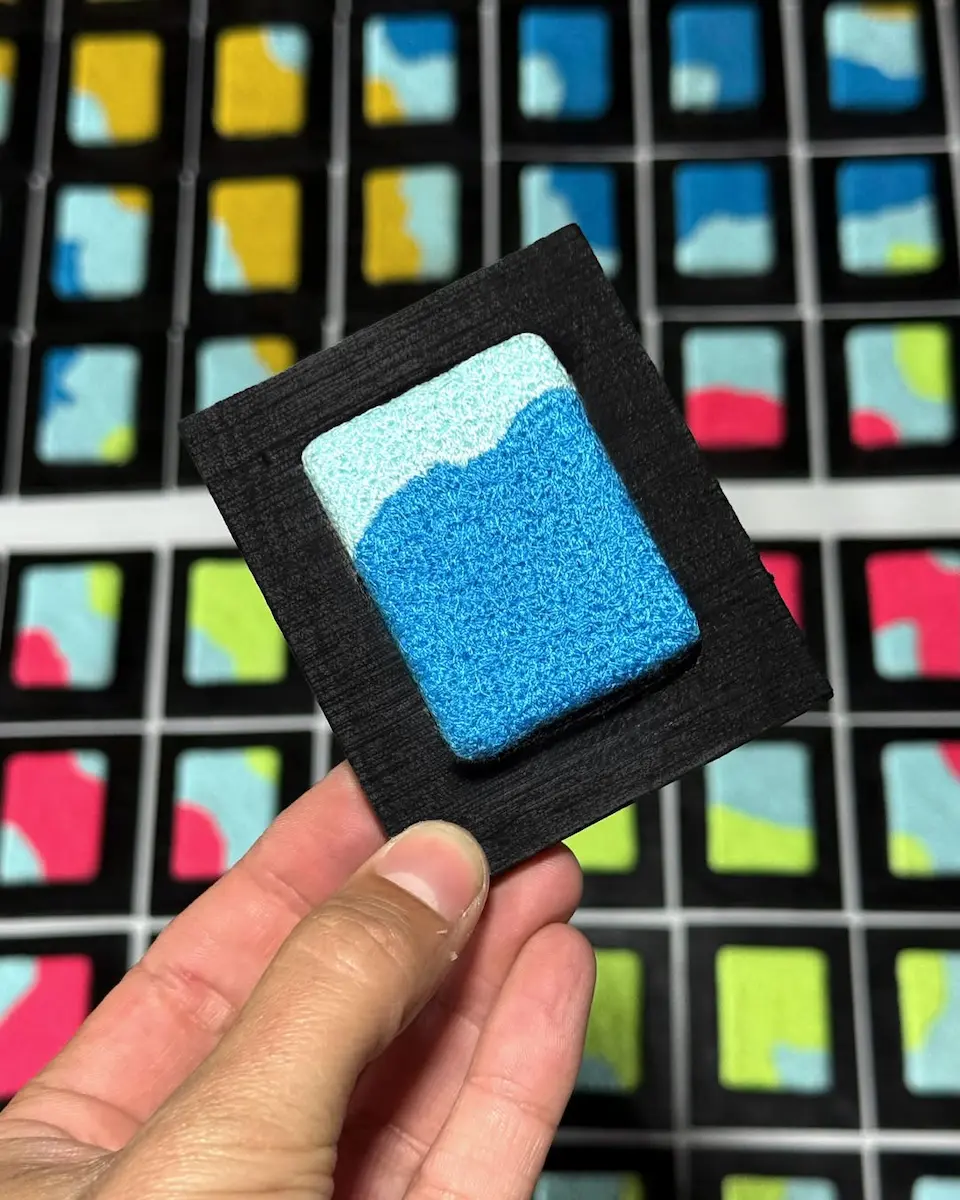
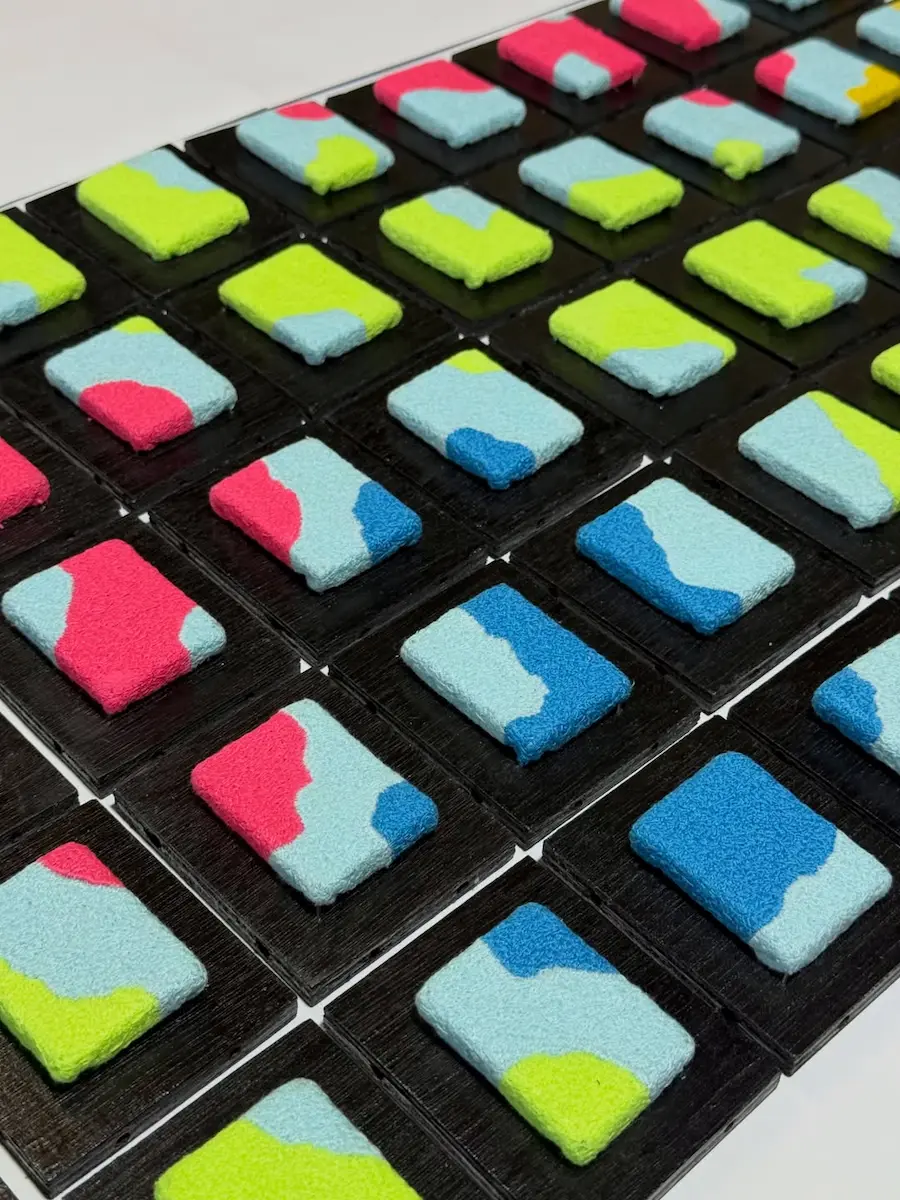
One of the most interesting aspects of this journey is the way embroidery ceases to be understood exclusively as an intervention on a flat surface. In Tower (July 2026), the composition shifts towards volume. Textile modules are arranged vertically, building structures in which repetition, variation, and the relationship between the parts take on a spatial dimension. The thread no longer merely draws or covers; it participates in the construction of a form that occupies space. This work extends the notion of balance present in Roberts’s work, shifting it from the relationship between lines and colours to the organisation of bodies, heights, and structures.
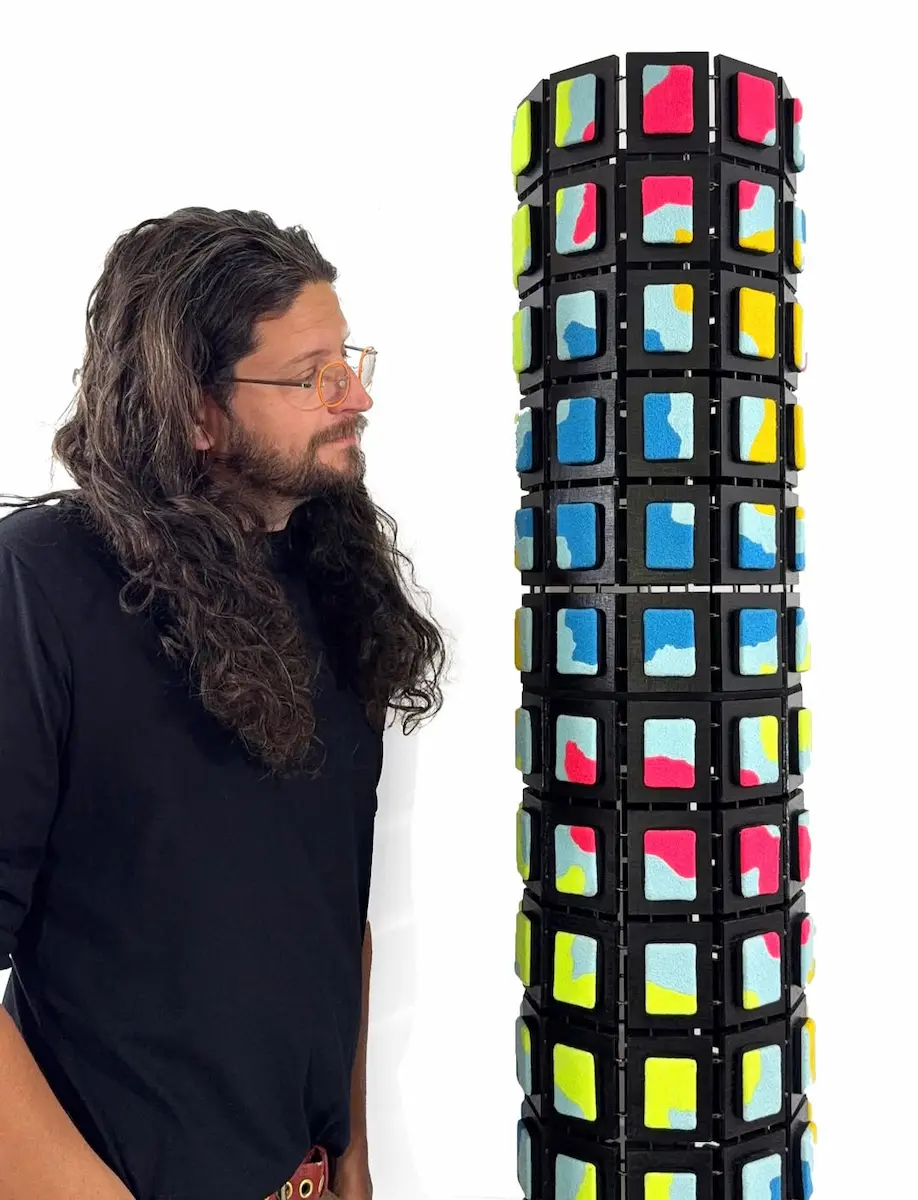
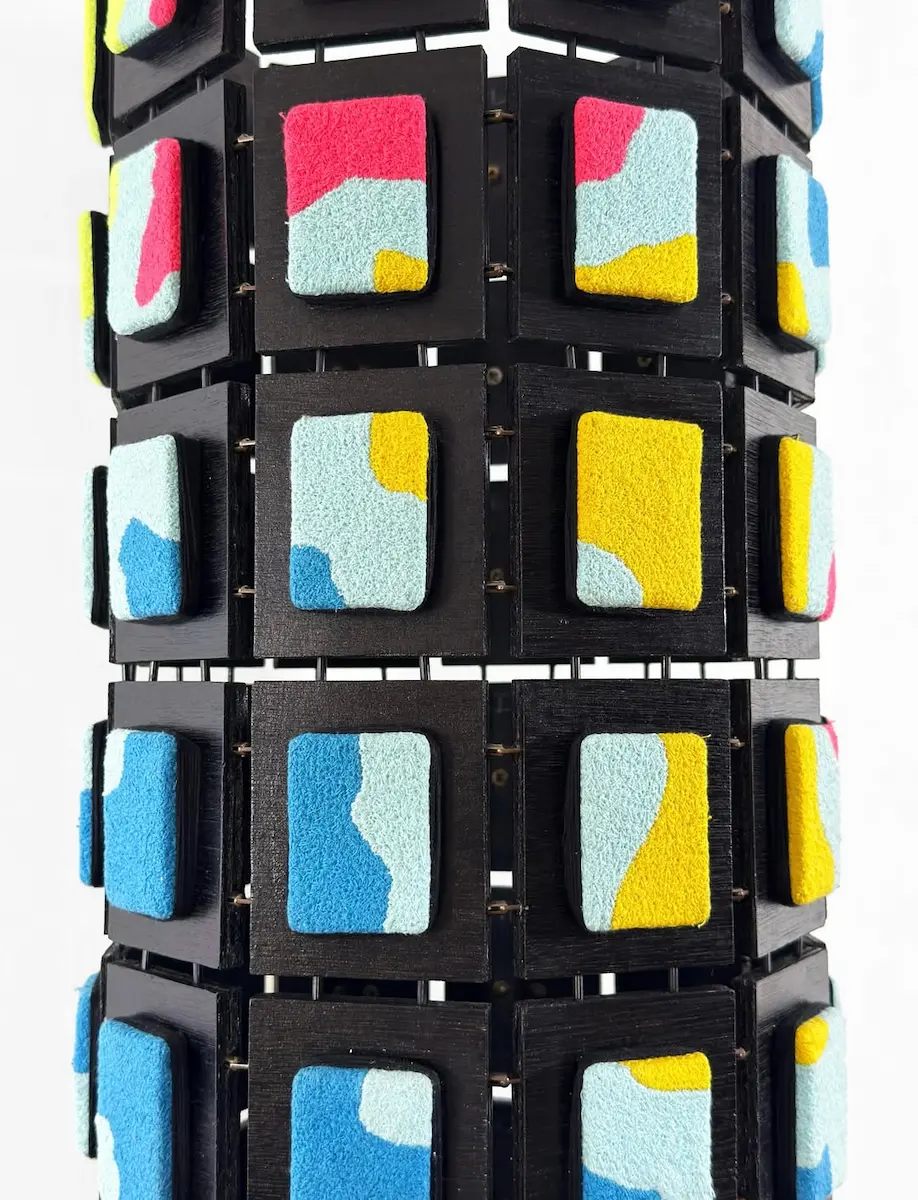
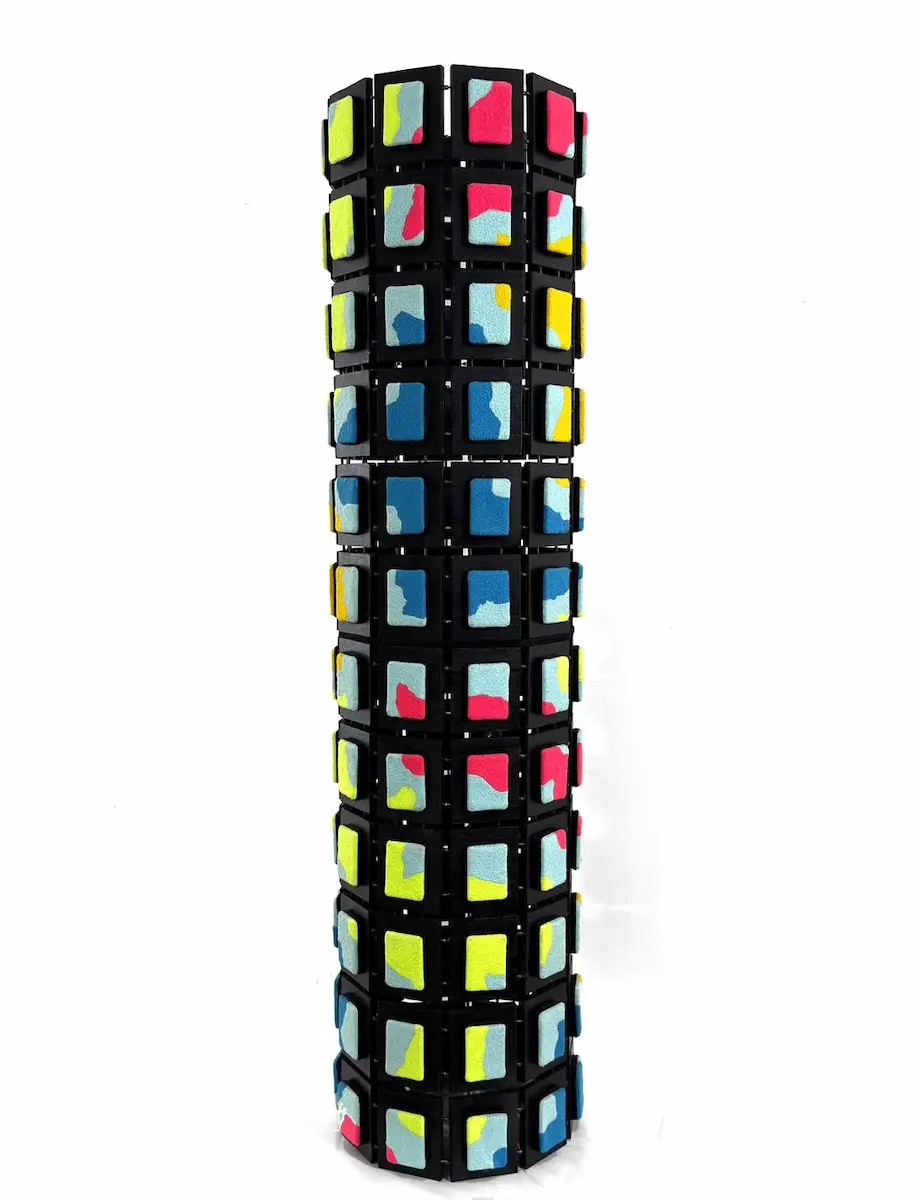
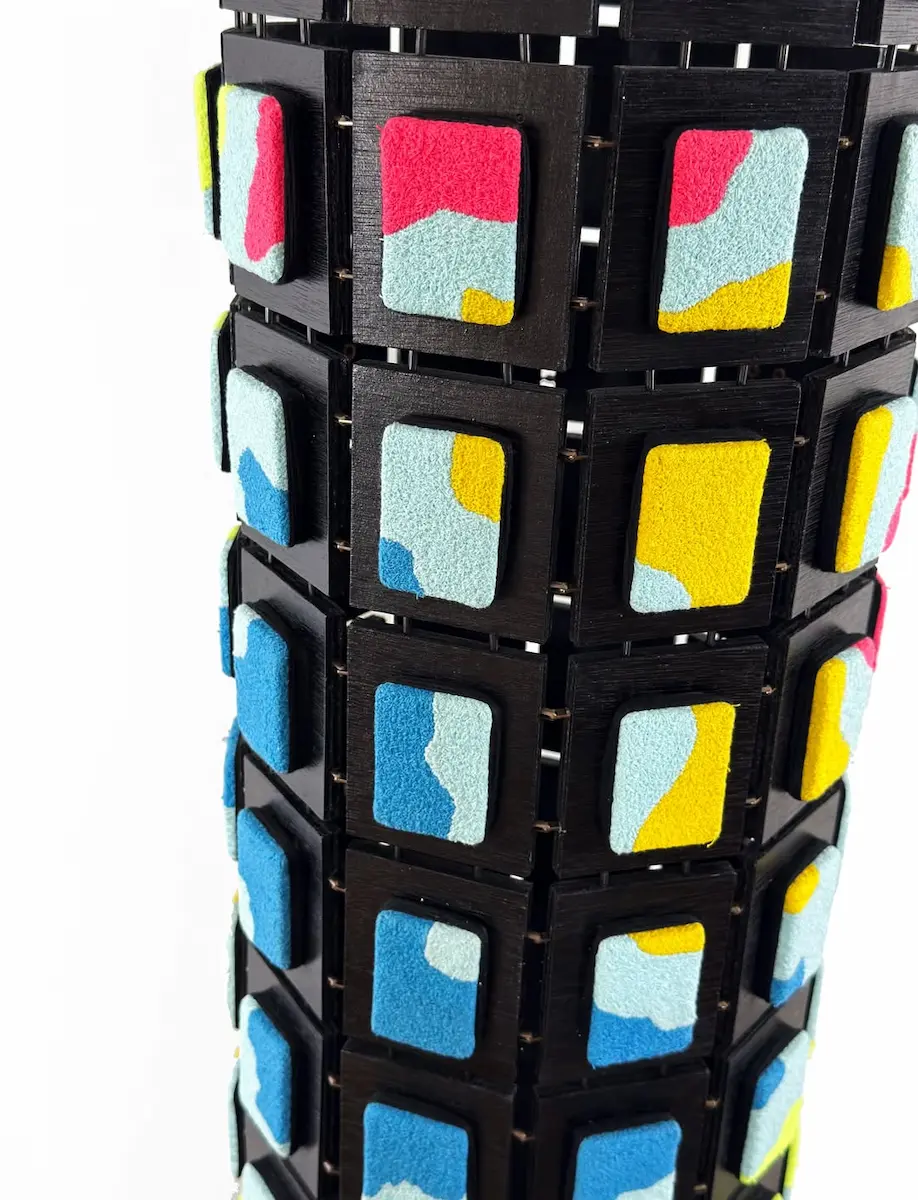
The JPR Stitch – Part One catalogue covers this period of work, spanning from August 2021 to July 2026. Its structure brings together the essay ‘Finding Balance’, the works, daily drawings, editions, and details of the pieces. It also includes ‘I let Creative Flow Guide Me’, an interview conducted by the author of this review and originally published in March 2026 in Mirada Ecléctica. The version included in the book is abridged; the full conversation can be accessed on the magazine’s website.
The essay ‘Finding Balance’ provides a key to approaching Roberts’s production. In it, balance is presented both as a formal matter and as a pursuit related to everyday life. It is not equivalent to perfect harmony, but rather to the possibility of coexisting with contrasting forces, accepting imperfection, and finding a relationship between them. This idea sheds light on his insistence on repetition, experimentation, and process, even though the works do not need to literally illustrate the artist’s thoughts to stand on their own.
The sheer scope of the catalogue allows one to appreciate precisely this dual dimension: it documents a practice whilst simultaneously offering an interpretation of its motivations. Its value lies not only in bringing together five years of production, but also in making visible how an everyday activity can become a field of artistic investigation. Stripped of its purely utilitarian function, sewing here finds other possibilities: it draws, builds, accumulates, and transforms.
In JPR Stitch, balance is not a definitive state to be reached, but a relationship worked upon stitch by stitch. The thread persists, changes direction, and loops back on itself. In that continuity, the work finds its form.


