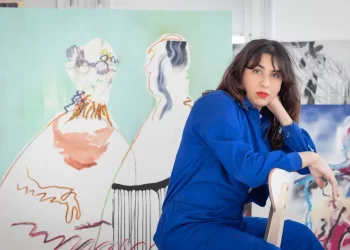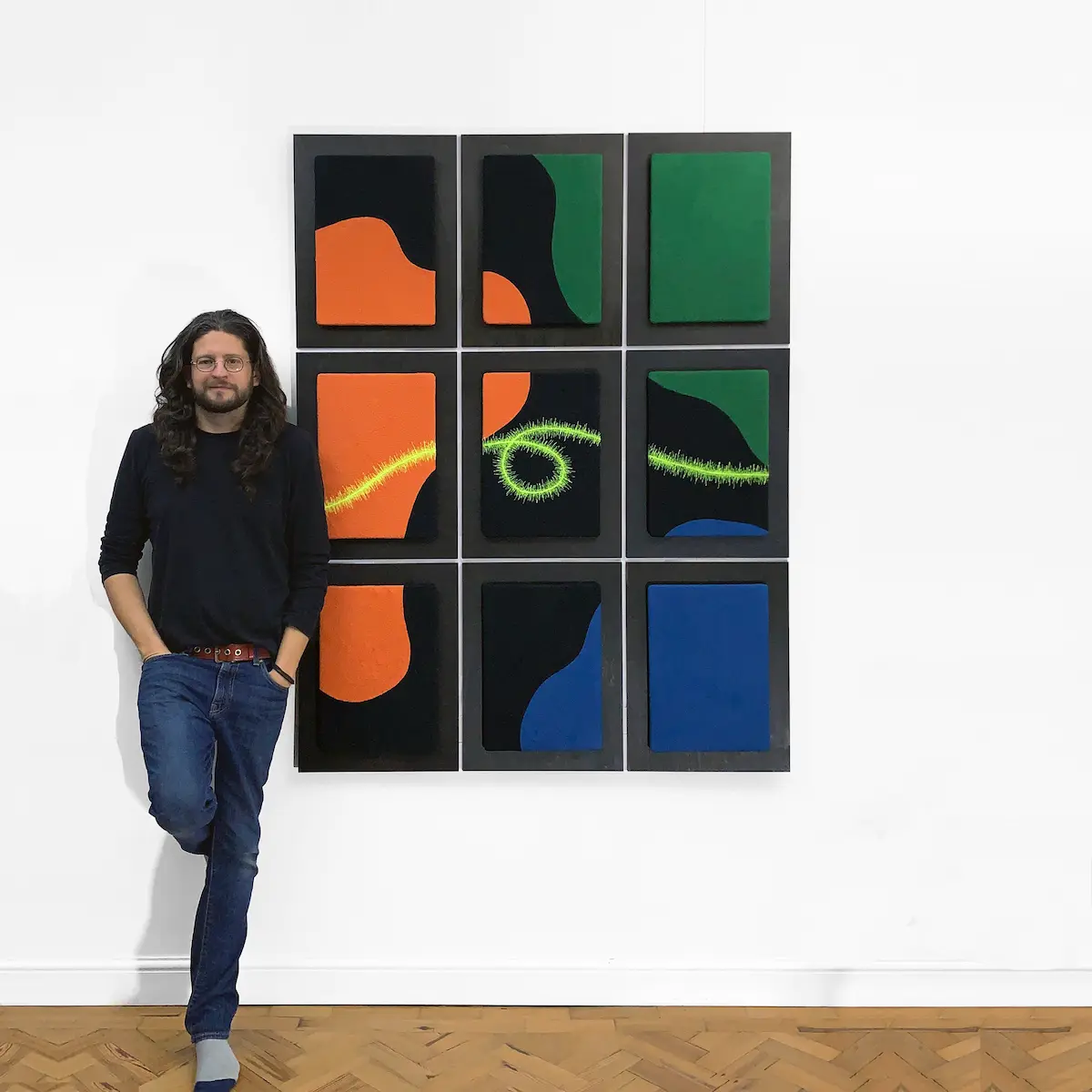
JPR Stitch (Dr. Jack Roberts), British textile artist renowned for freehand machine embroidery, reveals how he transforms stitching—using buckram as a stable base, his Janome Sewist 725S with free-motion foot, and an unbroken daily practice since summer 2021—into meditation that processes emotions, rebalances the mind, and turns artistic dreams into tangible reality.
Body, mind, and machine
Your work seems to emerge from an immediate gesture, without prior planning. How would you describe the relationship between your body, the sewing machine, and the thread as you create, and how do you make decisions about color, rhythm, or density in the moment?
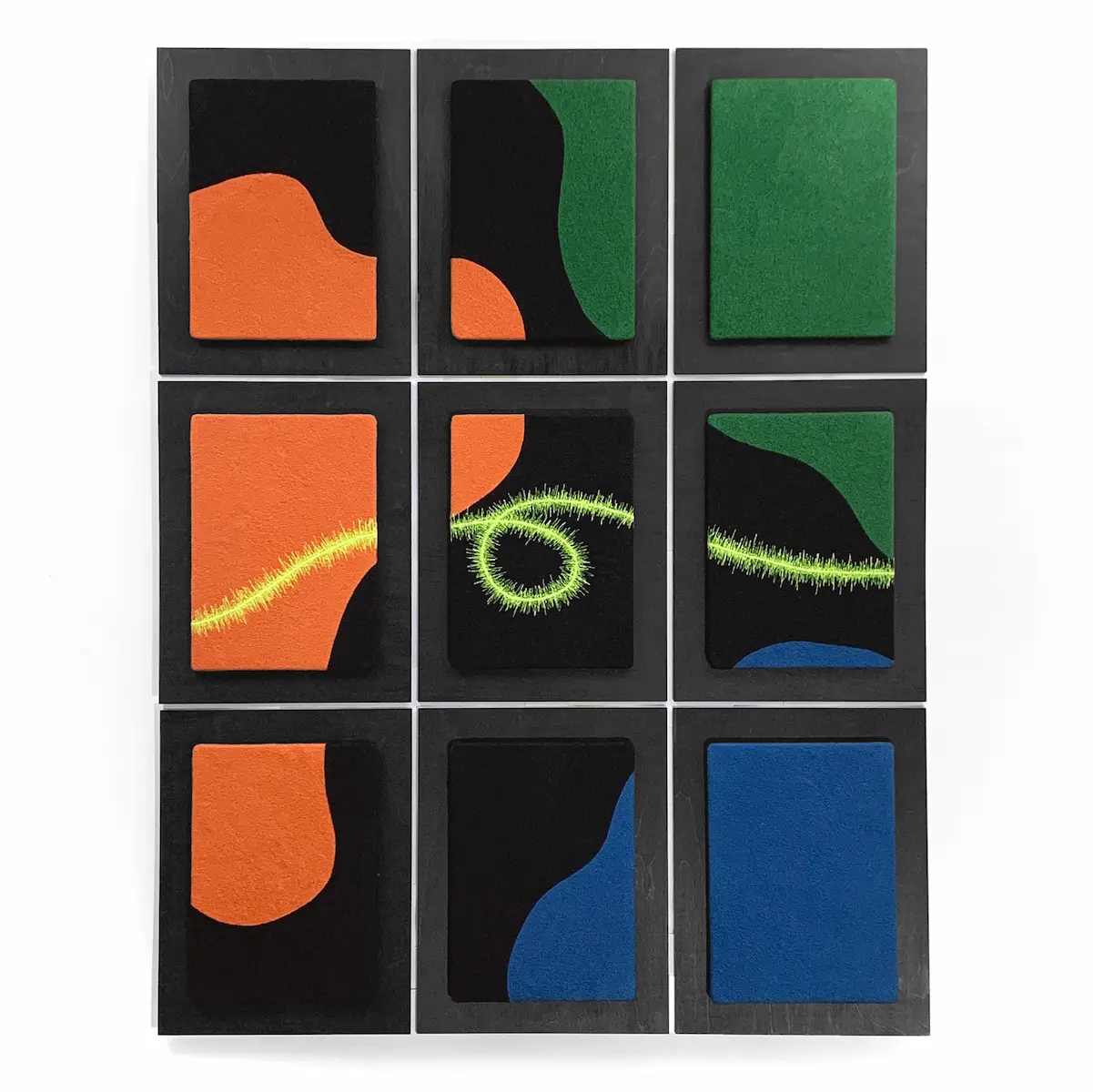
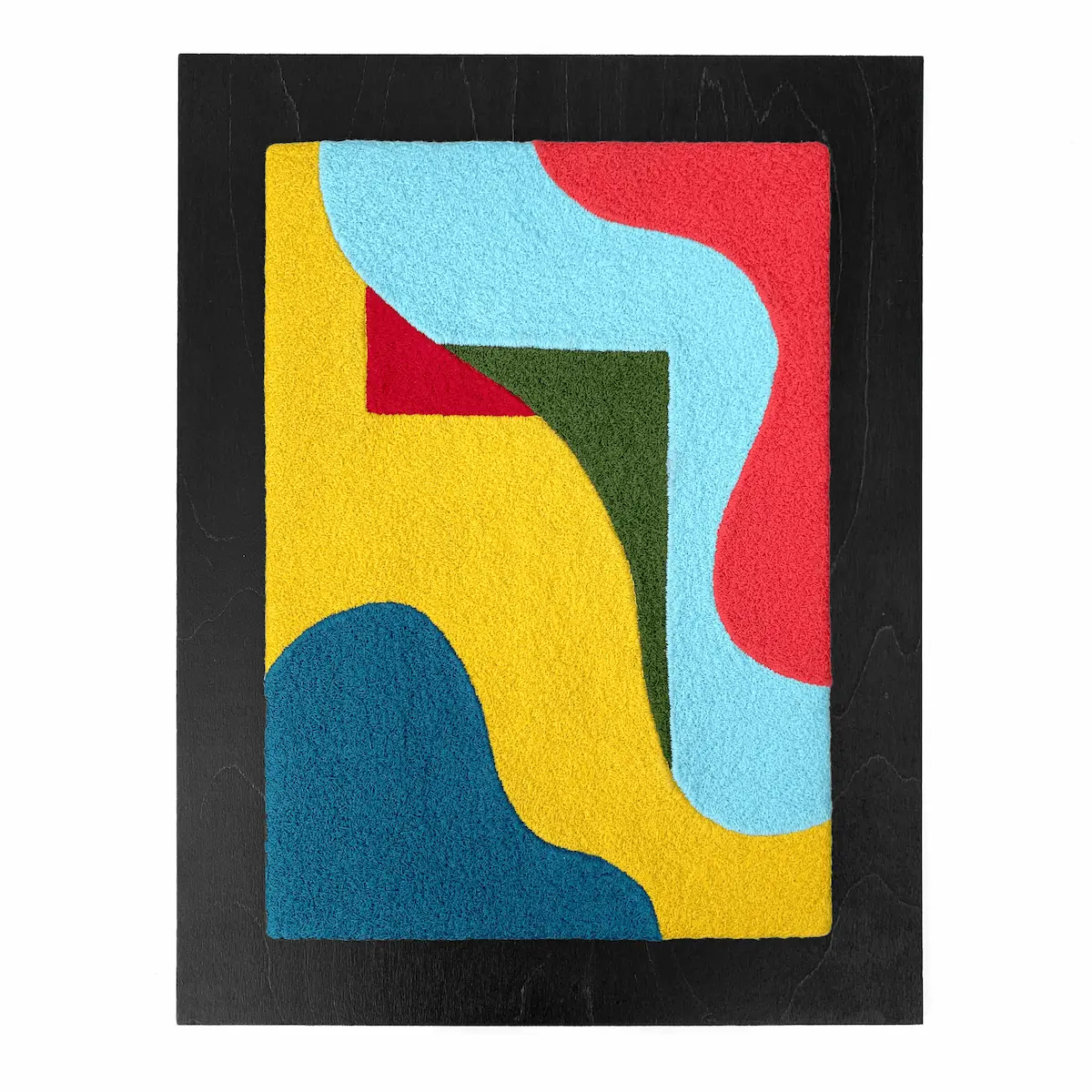
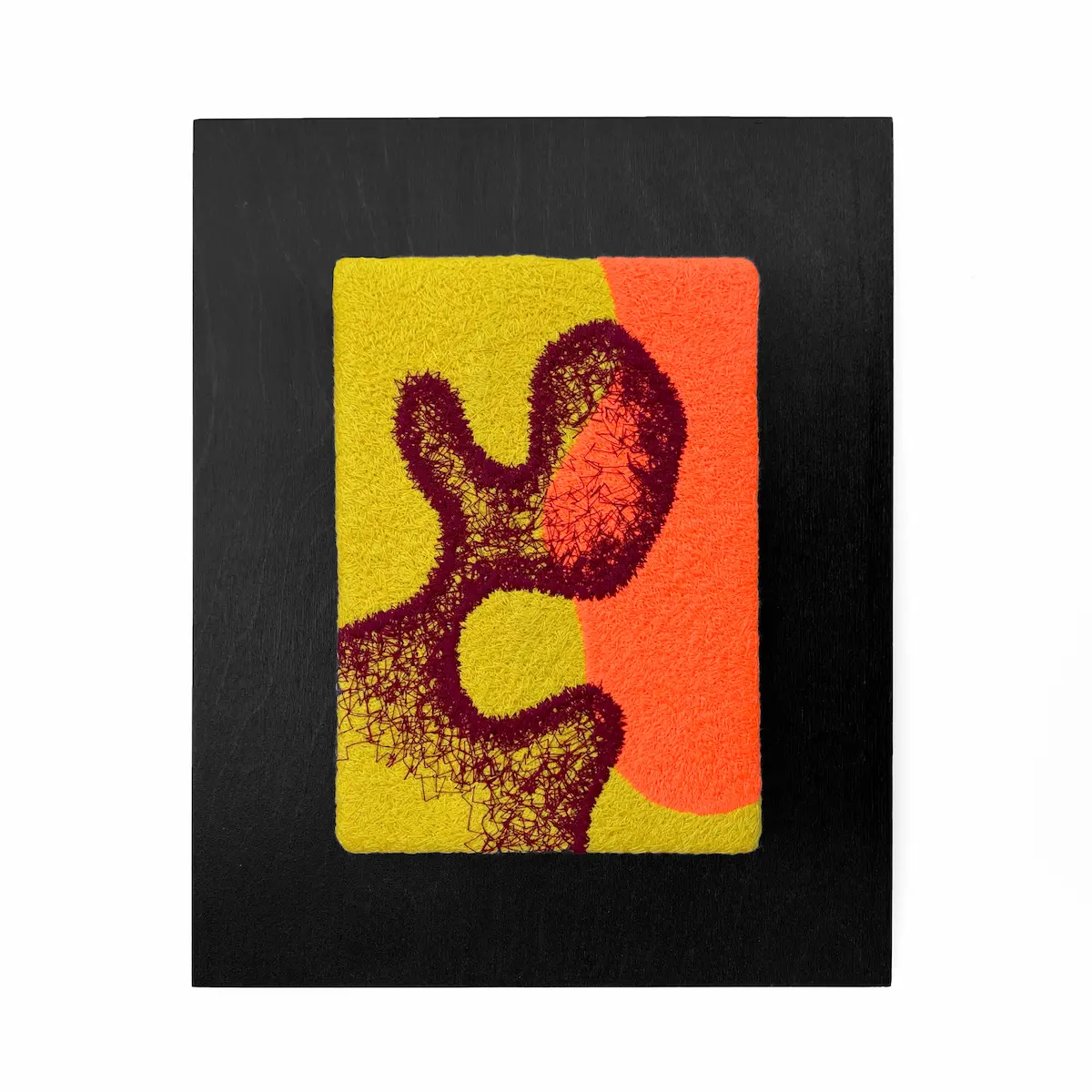
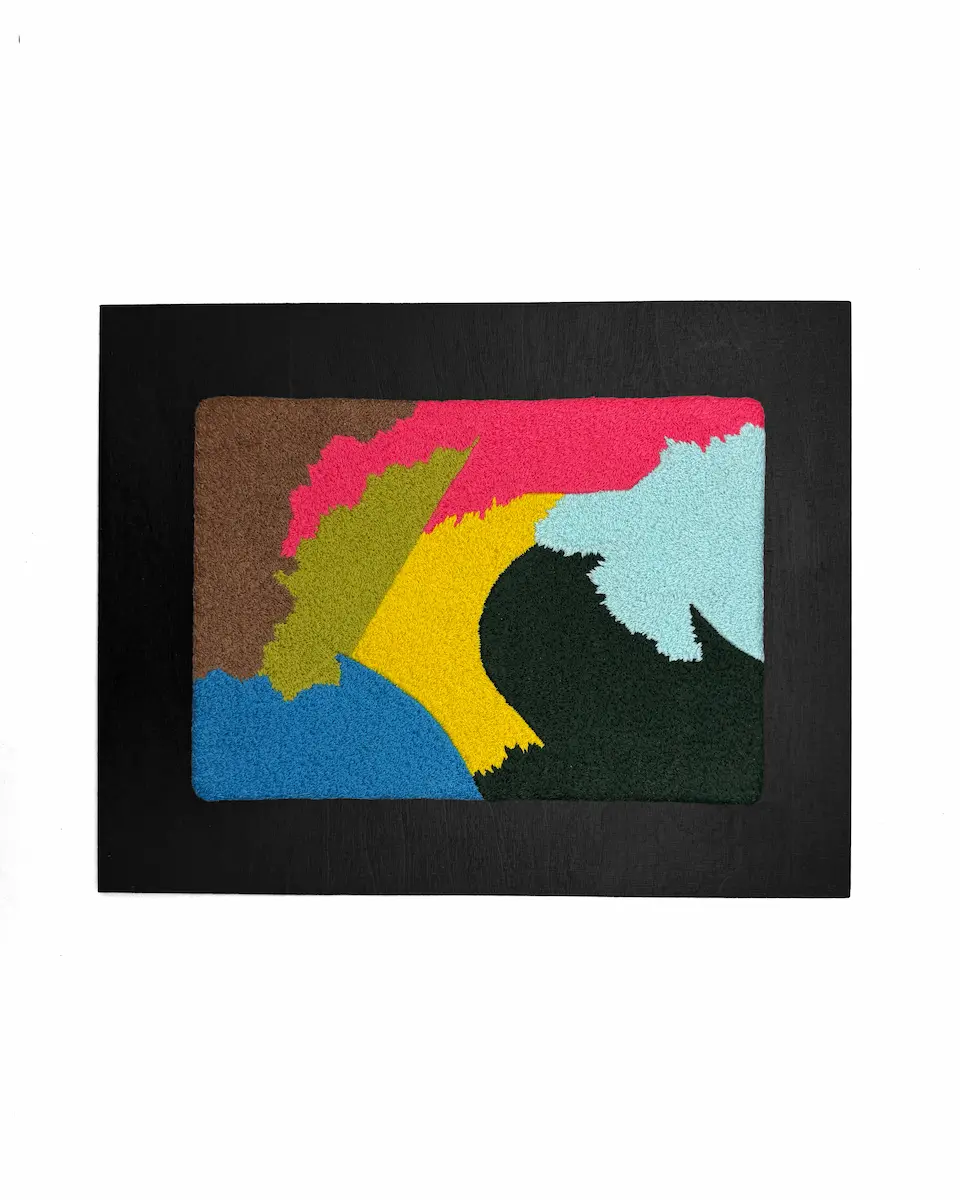
It is interesting that within your question you mention ‘gesture’, ‘body’, ‘machine’, but you do not mention the ‘mind’, this I think is key. My art comes from a much deeper place, it doesn’t come from my ‘thinking mind’. My art is grounded in how I am feeling in the moment and my current lived experiences. Often, when I am making, I can’t quite understand why I have picked a certain colour, why I have stitched a certain shape, but I try not to engage my ‘thinking mind’ whilst I am creating. I let my creative flow guide me. When I come to start a piece, I look at my wall of threads and pick a colour that I am drawn to in that moment, I start to stitch, allowing shapes to emerge and switch to another colour when it feels ‘right’. There isn’t a plan, I keep working the piece until it feels ‘complete’. It is at this point, after the piece is complete, that I engage my thinking mind to reflect. Looking at the colour choices, the shapes, the lines, and often it is then that I can see similarities with the piece and how I have been feeling or my recent experiences. If I have been stressed, the lines are broken and agitated, if I have been calm, the lines will be smooth and flowing. If my mind has been all over the place there is often a lot of different colours, but if my mind has been still and calm, there are fewer colours and the colours will sit well with each other rather than feeling slightly jarring. The stitchings are grounded in how I have been feeling in the moments they are created –– this is why all works are titled with the date they have been completed. It grounds them in that moment of time, like adding the date to your diary entry.
Your pieces involve a very free and expressive use of the sewing machine. Could you tell us a bit about the materials and tools you use? For example, what kind of base or stabilizing material do you work with, and what type of machine and presser foot do you prefer?
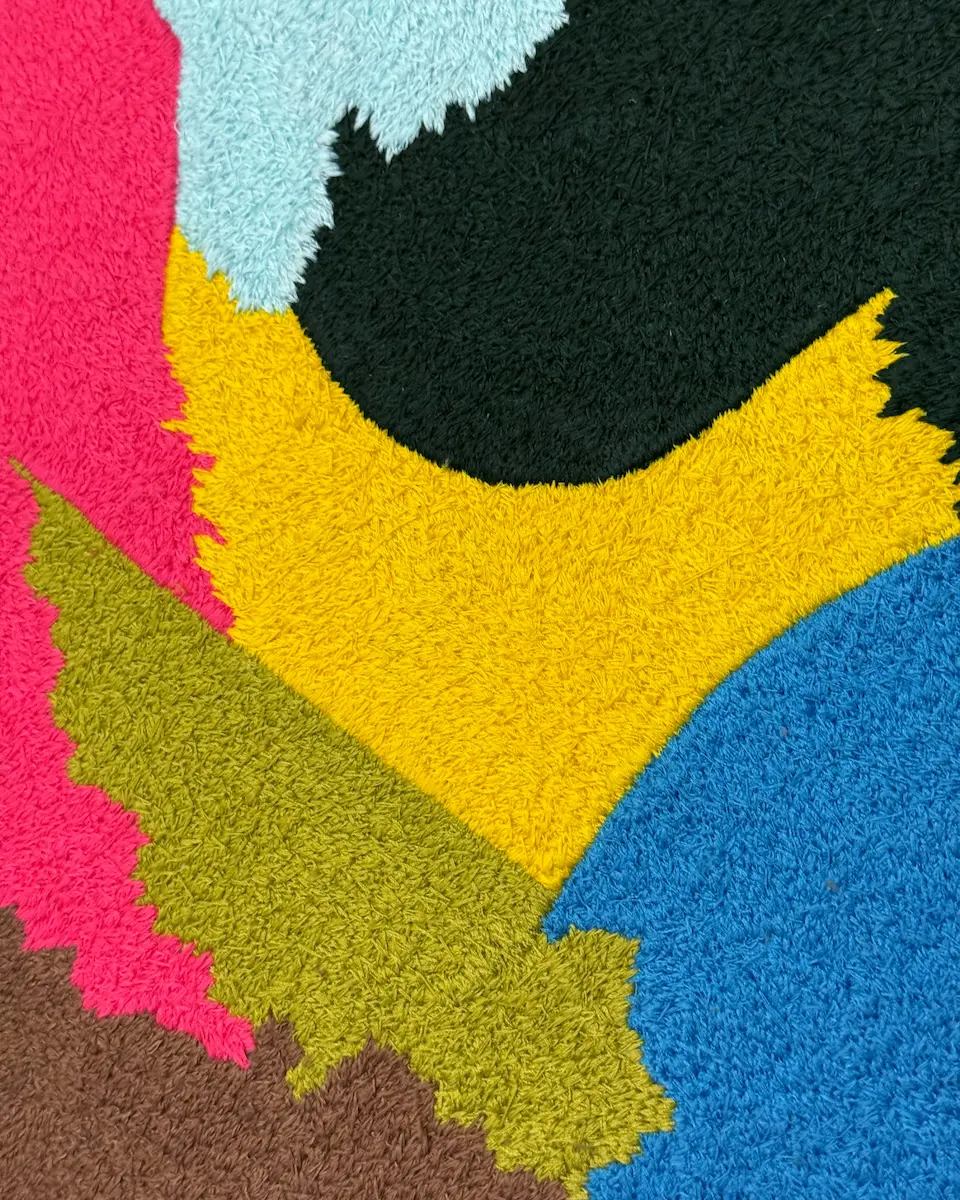
I usually work with buckram, which is similar to a heavy-weight interfacing and provides a stable base for stitching. My sewing machine is a Janome Sewist 725S, and I use a free-motion foot, sometimes referred to as an embroidery or darning foot. Although the presser foot is lowered, the free-motion foot allows the fabric to move freely in any direction.
You describe embroidery as a form of meditation and balance. How does this practice affect your mental state and daily life?
I think that my practice has become my ‘tool’ to allow me to process my lived experiences. As I stitch, my thinking mind goes into ‘stand-by’, it is not engaged, a deeper part of me is making the choices of where I stitch, what colours I use. It is as if sewing allows me to ‘process’ and move to a state of balance. When I stop sewing, I come back to the ‘real world’ feeling refreshed, feeling reset. I leave my emotions in the art –– if I was stressed, these feelings are put into the stitching, if I was calm these feelings are put into the stitching. When I finish sewing, I am almost empty, but not empty in a bad way, empty in a positive way, like I have washed myself clean. Therefore, the act of sewing re-balances me, in the moment of creating I feel tranquil and afterwards I feel refreshed.
The sound of the machine and the rhythm of your stitches are part of the experience. How does this soundscape influence your creative process and your thoughts?
The rattle of the sewing machine is quite loud and the vibrations of the machine move through your hands (which are in contact with the machine) into your entire body. I could imagine that for some people the vibrations and the noise could be very irritating, but for me, they are my entry into my flow state. The noise is almost like white noise that immediately turns my thinking mind off and the vibrations flow through my hands into my muscles and relaxes me. After just moments of sewing, I feel my shoulders drop, my jaw relaxing, my mind settling. It is not that the soundscape and the vibrations influence my creative process, it is that these two elements allow my tension to be released and my thoughts to be quietened, this allows my deeper flow to be engaged and it is that which then guides the creative process.




The discipline of creating every day
Before fully dedicating yourself to your artwork, you worked as a dealer, consultant, and teacher. How did those experiences shape how you approach creation and the art market?
I have often said that I had to become an expert before I could allow myself to make art. When I was younger, I felt it hard to express myself through art, but I knew that I wanted to be involved in the arts. I was involved in the artworld but didn’t really create my own art, I was proficient in a lot of mediums and taught a lot. I had completed a PhD in art theory and lectured on these topics. I was an art dealer buying and selling art by some of the world’s most famous artists. After about 15 years of this, I had enjoyed what I had been doing, but I felt something was missing, I didn’t feel truly fulfilled. During this time, I didn’t give myself the permission to create art that truly reflected me. I didn’t think that what I had to say was ‘worthy’. When I did make during this time, it was very deep, critically engaged, it was looking out at the world rather than looking inwards –– it was forced. I think that my experiences in the artworld gave me confidence. It was this confidence that then allowed me to express myself in the way that felt right and through a medium that resonated with me –– I had the confidence to allow my deeper self to guide my art, the confidence to share this with the world and the confidence to say that it was worthy of being created.
Your work requires physical and mental endurance. Since you began this daily practice, how has it changed your body, your perception of time, and your relationship with yourself?
For years, I wanted to create but I didn’t give myself the permission to create, life took over and my practice stayed in the background, I could go for months and never create. When I took the decision to focus on my art, I knew that I needed a way to stay connected to my art, I knew I needed a way to make my art my priority. I decided that I needed to create every day, even if I just spent a couple of minutes each day on my art, I would have achieved something and I would be connected to my practice every day, so I set myself that challenge. When I set myself a challenge, I am quite good at sticking to it. That was in the summer of 2021. I have kept this up ever since. I create every day, even when I am on holiday but rather than working on my sewing machine, I work instead with pen and paper. It was hard for the first few months and it did take a lot of physical and mental endurance during this time, but then it became a core part of my life. People often say, how do you find the time every day, how do you force yourself to create every day. For me, my thinking mind is now detached from the process (as is my mood), people eat every day, brush their teeth every day, often doing it without thinking, even doing it when they are busy or when they are feeling stressed or unmotivated. This is me with my art –– it is unnatural for me not to create. Some days I can spend the whole day on my practice, but other days I might only spend a few moments. If my motivation is low, that will not stop me, but it might instead inform what I create. Daily practice has become a core part of my artistic practice and it does change your relationship with time. It has made me feel that even the most unachievable goals are achievable. If you spend just a few moments today working towards it, by focusing each day on what you can achieve that day, over time these daily acts build into something huge. Sewing every day has also made me a much happier and more fulfilled person –– I am spending time every day doing what I feel like I am meant to do.
When you sit down to stitch, what conscious or unconscious criteria guide you? Are there things you prefer not to embroider or relive?
Choosing is not the right phrase, I don’t choose, it’s not that I sit down and choose a specific memory or moment to stitch. Instead, when I sit and start to sew, I bring to the piece how I am feeling in that moment, but through the act of sewing, I find calm and balance. I find calm and balance within myself and calm and balance within the art. Sometimes, it might take me a few hours of sewing to find that feeling of balance and other times I can reach it almost instantly. Once I begin to feel balance, it isn’t that the aims have been achieved and I stop sewing, instead I keep sewing, sometimes for hours and hours. It is not a choice what to sew or not, I sew what I feel. However, when I reflect on the piece after I have stitched it and reflect on what has led me to stitch the piece in that way, it is those reflections that I sometimes decide not to share. I might say that I have been feeling stressed and this has informed the art, but I choose not to share what has made me feel stressed, that for me is personal.

A book for daily practice
What emotions or states do you hope to evoke in those who view your pieces, and have you ever been surprised by the audience’s interpretations?
One of the reasons I titled the art with the date they are created is that I don’t want to guide people’s emotions. Some of the pieces I have created, I don’t like, some of them I find particularly depressive (as that is how I was feeling when making them), some of them I find make me feel agitated when I look at them (as that is how I felt when making them). But for me these emotions do not come from the visuals of the art, but the knowledge of how I was feeling when I was making them. When people see my art, the overriding emotions that they evoke in people are positive, they are feelings of joy, energy, calmness. This for me is extremely interesting –– the process of sewing is a positive one as it rebalances me, but often the emotions I put into the art are not positive emotions, yet the art that emerges is itself positive –– it is bright, joyful, it is calm, balanced, it is happy. The act of sewing allows me to process my emotions. I come out of the creative process feeling calm and tranquil. I want people to have this same experience –– they may come to look at my art with feelings of stress, but I hope that if they look at my art for a few moments, these feelings dissipate and they leave feeling fresh and rebalanced.
Your book combines a guide for daily practice with a presentation of your work. What inspired you to turn this practice into a book, and how did you decide what to include or leave out?
One of the things I do each day is to create a small stitching that I call my daily stitch drawings. At the end of my first year of creating one each day, I had the urge to combine them into a book, but it seemed quite self-indulgent to create a book that presented a year’s worth of black and white abstract stitchings. At the same time, I was getting a lot of questions from followers on social media about daily practice, what it was and how I did it. That was when the idea came about to create a book that was two books in one –– from one side it presented my own daily practice, but from the other it was a guide for people to start their own daily practice. This seemed ‘right’, so I embraced it and brought the idea into fruition. As far as what to include within the book, there was no decision to be made, I create a stitching each day and for the book to reflect my daily practice, every single one needed to be included. As you look through the book, each double page spread gives the reader a blank page where that they can use for their daily practice (whether this be a daily diary, a daily drawing, mindfulness or something else) and on the opposite side is my daily stitch drawing to provide encouragement to keep working on your daily practice. I have been amazed how popular the book has been, I have sent them all over the world, from the USA to Australia and from Iceland to Poland.
Beyond admiring the aesthetics of your embroidery, what do you hope readers take away from the book?
I hope that it provides encouragement for people to embrace their passion and to turn their dreams into their reality. I spent years wanting to be an artist but I was doing nothing to try to make it happen, but then I embraced daily practice and it helped me to focus on my art. Bit by bit, day by day I was working to turn my dreams into my reality. I now create every day, I am preparing my art for my second museum solo exhibition, I am being interviewed for magazines from all over the world, I am living my dream, but it all started with daily practice. I hope that the book gives people the encouragement to embrace their own dreams, and helps them to turn them into their reality.
If you had to define in a single sentence what “creating every day” means, what would it be?
Well, maybe you can tell from the interview so far, defining anything in a single sentence is not easy for me… I like to write a lot… but I will try. Creating every day to me means being connected to your practice each and every day –– it doesn’t matter what you make, whether you spend hours or just a few moments, creating every day means that you are connected to your art, you are living it, each day builds on the previous, what you do in one day might look insignificant but when 100 days, 500 days, 1000 days’ worth are combined you will be amazed what you have accomplished. Well, that is a long sentence…
Looking toward the future, how do you envision your daily practice, your work, and the way others experience it evolving in the coming years?
As long as I am continuing to live with connection to my art and create each day, then I am achieving my aims. The art I make has changed since I started and my art will continue to develop and change, but the act of making will inform these changes. I will allow my creative flow to guide me. As far as how I want others to experience it, I want to keep pushing and developing. Social media has been a way for people to engage with my art since I started to make, but in recent years there have been new developments –– exhibitions and my book. These have allowed people to connect with my art in different ways. I will keep pushing and exploring new ways to share my work, but often, these will be informed by the work itself, my art develops day by day and I hope that will continue for many years.
**Learn more about the artist https://www.jprstitch.com/